


Creating optimal conditions for equine recovery
Recovery is a critical part of maintaining soundness, performance, and long term durability in horses. Training and competition place repeated strain on muscles, joints, tendons, and ligaments. Without proper recovery, accumulated stress can lead to stiffness, fatigue, reduced performance, and increased injury risk.
Supporting the body’s natural recovery processes helps horses maintain comfort in muscles and joints while preparing them for consistent work.
The role of LED treatment in equine recovery
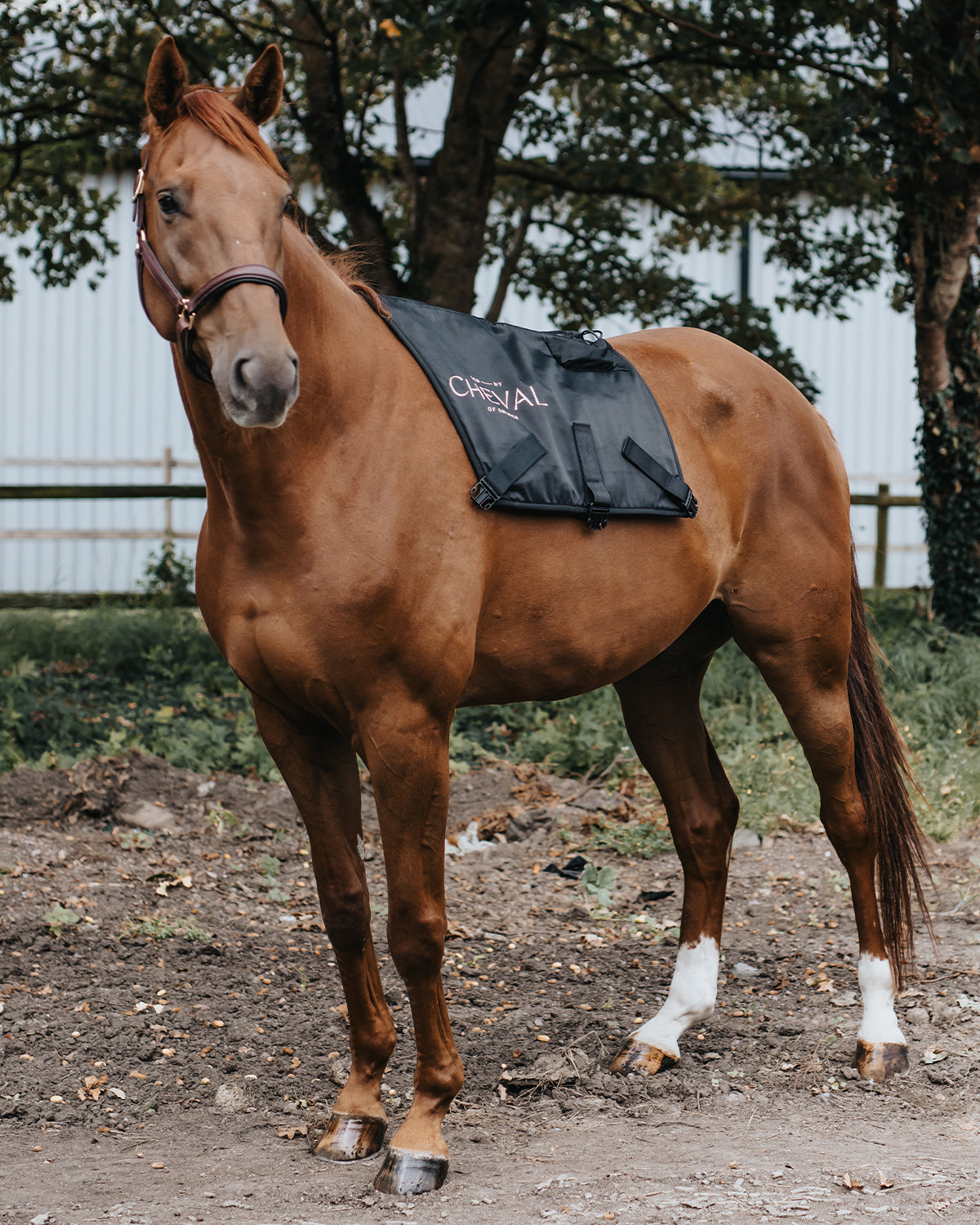
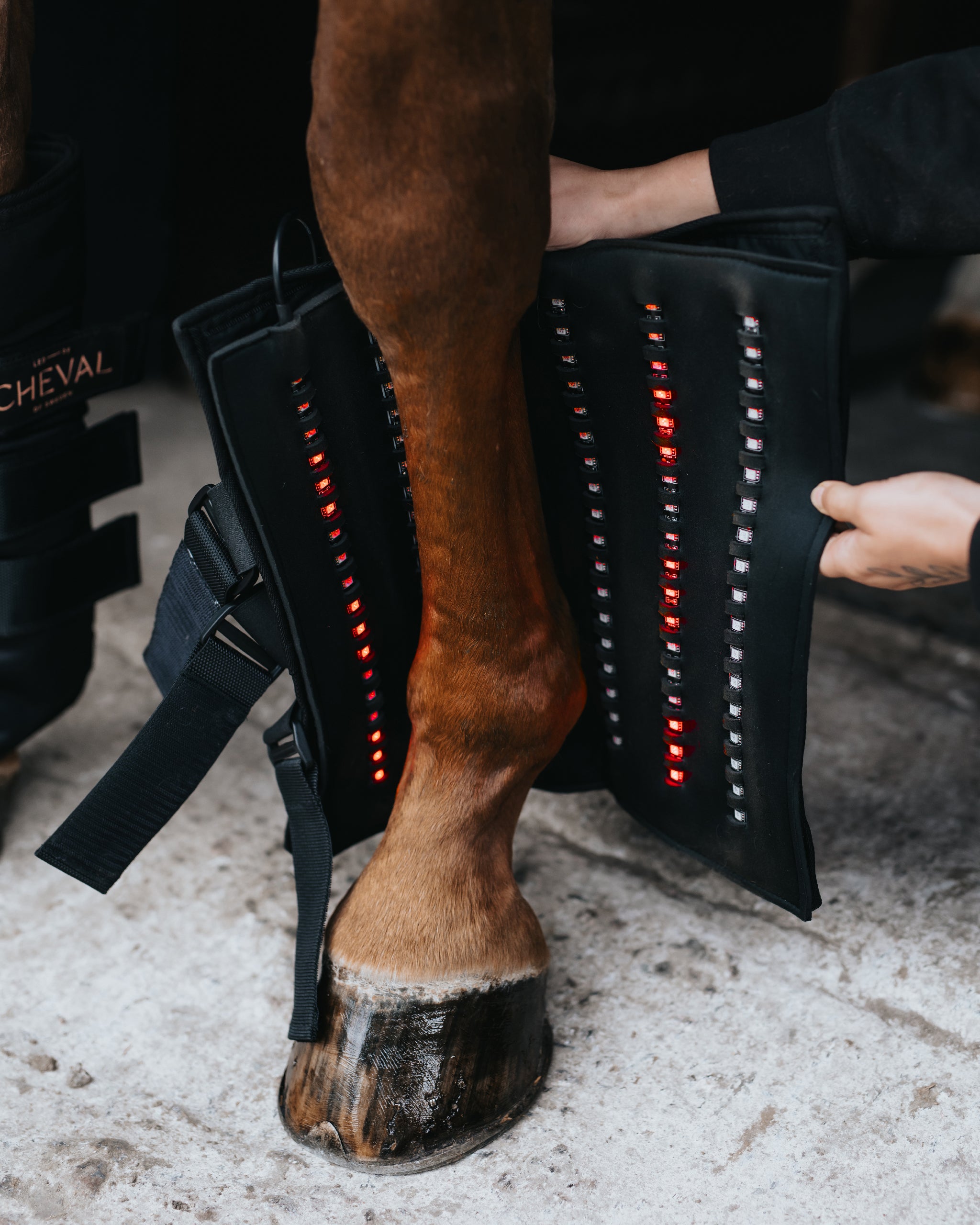
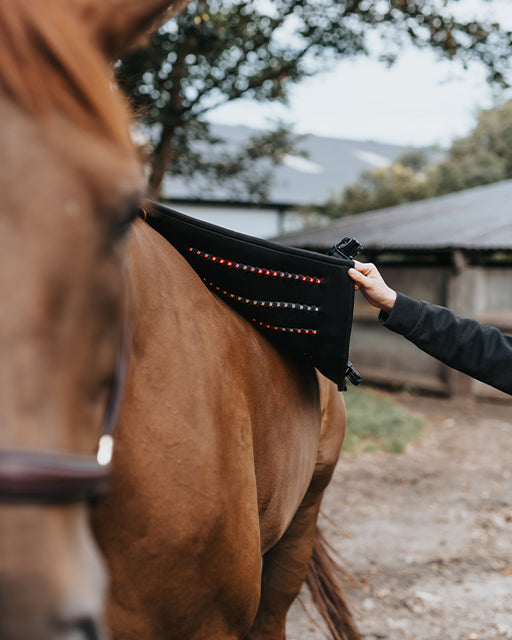
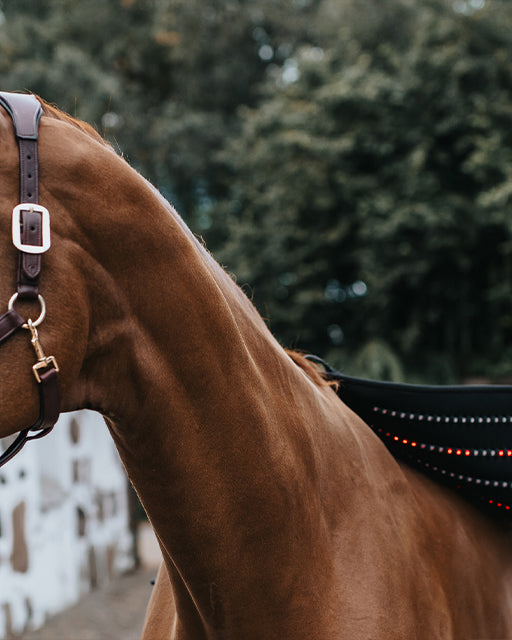
LED treatment is a non invasive method that supports the body’s natural recovery processes through specific wavelengths of red and infrared light within the optical window.
These wavelengths interact with biological tissue at the cellular level, supporting circulation, cellular activity, and tissue repair. When integrated into recovery routines after training, travel, or competition, LED treatment can help horses recover more efficiently and maintain physical resilience over time.
Key benefits of LED treatment for recovery
Training places physical stress on muscle tissue and connective structures. LED treatment supports cellular processes involved in tissue repair, helping the body recover more efficiently after exertion.
Intense work creates microscopic stress in muscle fibres. LED treatment supports circulation to working muscles, helping reduce stiffness, soreness, and fatigue following exercise.
Inflammation is a natural response to physical load, but excessive inflammation can slow recovery. LED treatment helps support balanced inflammatory responses after training or competition.
Joints, ligaments, and tendons experience repeated mechanical load during training. Supporting recovery in these structures helps preserve mobility and long term comfort.
Recovery is not only physical. Horses also benefit from periods of relaxation after demanding training, travel, or competition. LED treatment can support a calmer recovery phase following exertion.
By supporting circulation and cellular activity, LED treatment helps the body restore energy levels after physical effort and prepares the horse for upcoming training sessions.
Consistent recovery routines help reduce the impact of cumulative strain. Supporting recovery helps maintain tissue resilience and supports soundness throughout training seasons and competitive careers.

LED treatment and traditional recovery methods
Traditional recovery approaches such as rest, cold therapy, compression, and supportive care remain valuable in equine management. LED treatment complements these methods by supporting biological recovery processes within the tissue.
Supporting cellular recovery
While many traditional methods act externally, LED treatment interacts with biological tissue at the cellular level, supporting processes linked to tissue repair and circulation.
Non invasive and drug free
LED treatment is non invasive and does not require medication or withdrawal periods, making it suitable for regular use.
Deeper tissue interaction
Cold therapy primarily affects surface tissue. Red and infrared wavelengths can penetrate deeper biological layers, supporting recovery in muscles and connective structures.
Supporting injury prevention
By supporting recovery after physical exertion, LED treatment helps manage accumulated strain that can otherwise increase the risk of injury over time.
A modern approach to equine recovery
Modern equine care recognises the importance of structured recovery routines. Supporting the body’s natural repair processes helps horses maintain comfort, performance capacity, and long term durability.
LED treatment provides a practical way to integrate recovery support into daily stable management. Used consistently after training, travel, or competition, it helps horses recover efficiently and remain prepared for continued work.